Mass Shell to Anything Uploader + Mailer: what this web shell uploader actually does
The Mass Shell to Anything Uploader + Mailer is a purpose-built web shell uploader made for pushing files across large shell lists without wasting time on entries that cannot really upload. Instead of firing blindly at every shell, it first checks which targets are usable, confirms real upload support, and only then starts delivery.
That difference matters at scale. Dead shells, fake write permissions, and inconsistent upload forms can drain hours from a run, so this tool trims the list before the main job even begins.
How the web shell uploader works
This web shell uploader uses a simple three-part sequence: probe, verify, then execute. The logic is practical—reject weak targets early, and reserve actual upload attempts for shells that can genuinely accept the file.
The result is straightforward: less guesswork, fewer failed pushes, and a cleaner workflow when you are dealing with large shell inventories.
Two-stage probing for reliable web shell uploader validation
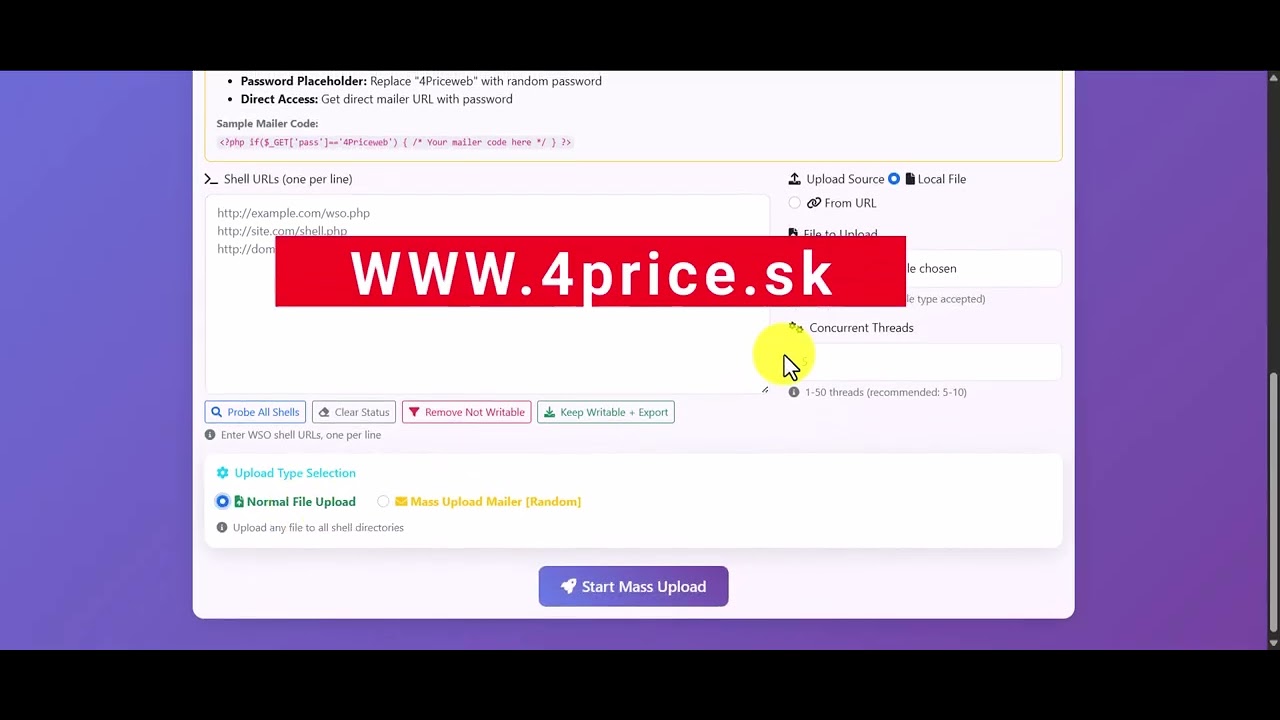
The first pass is fast and heuristic-based. It checks each shell for the form fields and input patterns commonly tied to file handling, then flags the target as Writable or Not Writable.
That first label is not treated as proof. Any shell that looks writable moves into a second test, where the tool performs an actual upload using a marker file.
A shell only gets Confirmed status after that marker upload succeeds. That extra verification is what gives this web shell uploader real-world reliability, because the target must demonstrate actual upload capability rather than merely appearing valid.
File source options and mailer deployment behavior
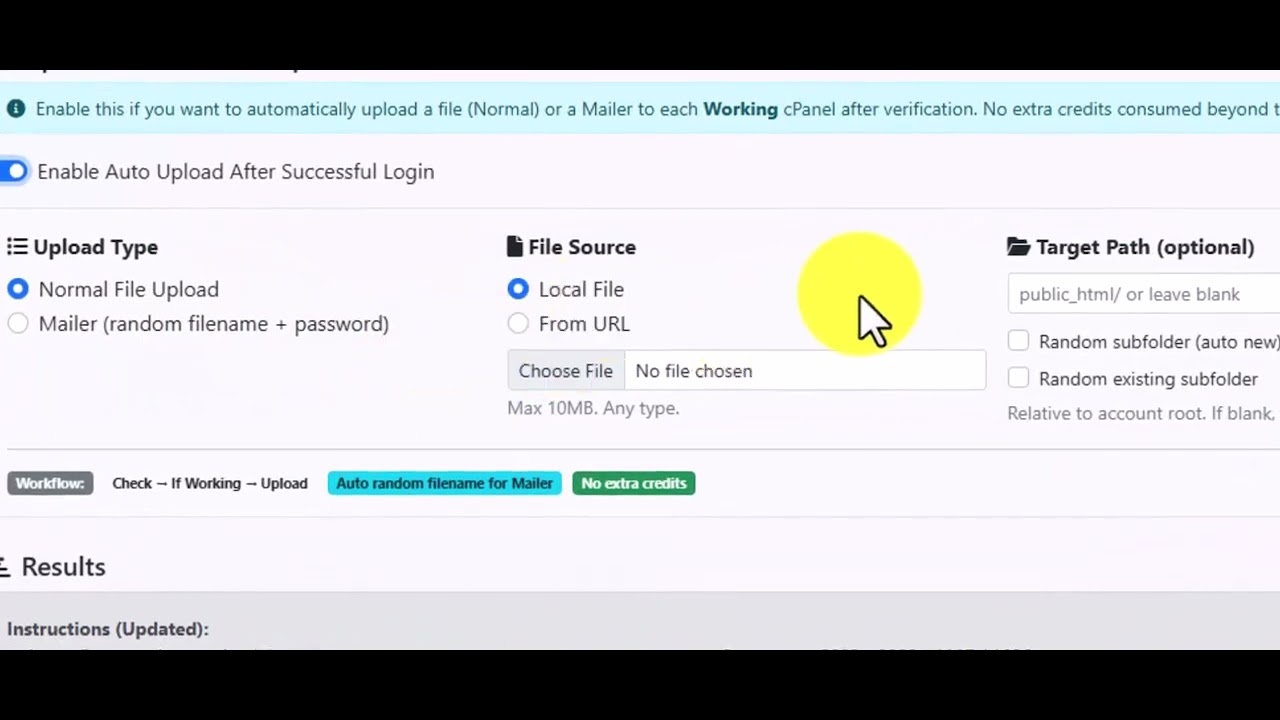
The uploader accepts two file sources: a file from your local machine or a remote URL. If you use the remote option, the fetch size is limited to 50MB to keep the process stable.
Mailer deployment includes built-in automation so each deployed copy stays distinct, reachable, and easier to track across a large batch. That is especially useful when many uploads succeed at once and you need clean separation between them.
- Password Randomization: The placeholder "4Priceweb" is replaced with a unique randomly generated password for every mailer.
- Filename Obfuscation: Each mailer gets a randomized 8-character filename ending in .php to reduce naming conflicts.
- Instant Access: After a successful deployment, the tool generates direct URLs with embedded passwords so access can be checked immediately.
web shell uploader controls and live monitoring
This web shell uploader gives you direct control over throughput with adjustable concurrency from 1 to 20 threads. That range lets you tune speed against server load, which matters when files are being pushed into multiple directories across a wide list of targets.
You can also monitor the run in real time. A live dashboard shows success totals, failure counts, and overall progress through visual metrics while the job is still active.
Bulk web shell uploader list management
The bulk web shell uploader includes filtering and cleanup features built for large working lists. You can remove unresponsive shells, sort entries by status, and export only the Confirmed shells for later use.
The status system is quick to read. When you are sorting through hundreds or even thousands of entries, clear visual feedback saves time immediately.
- Green: "Writable" or "Confirmed" status.
- Yellow: "Unverified" status while testing is still pending.
- Red: "Not Writable" status or a system error.
- Spinner: A real-time test currently in progress.
Reliability features and workflow support in this web shell uploader
This web shell uploader does more than move files. It also includes credit validation to reduce balance-related issues and detailed logging so every operation can be reviewed after the run.
Those logs are genuinely useful. They help you inspect performance, identify weak shell lists, and improve later deployment batches using actual outcome data instead of assumptions.
The interface is responsive, clean, and built for high-volume shell management work. For teams handling repeated upload operations, the combination of verification, logging, and controlled execution creates a workflow that is efficient and technically accurate.